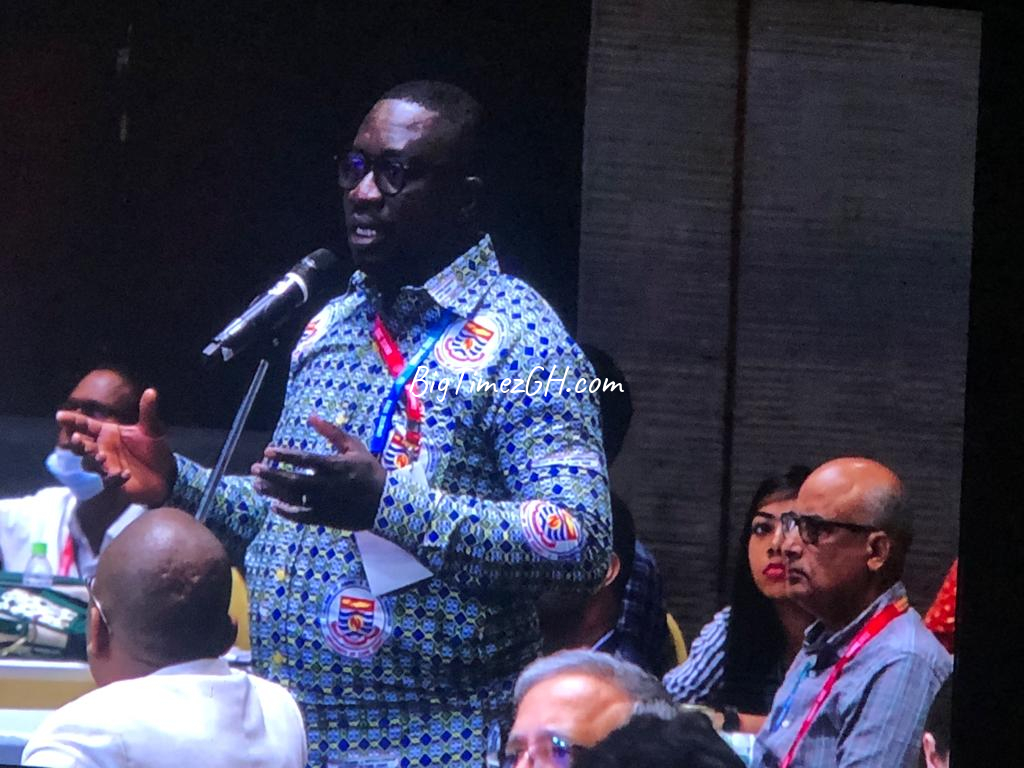
Land that requires extensive filling with laterite before construction is fundamentally unsuitable for housing and developers should interpret such a requirement as a clear red flag for poor site selection.
That is the stark warning from Dr. Engr. Surveyor Ebenezer Ankomah Gyamera, a Senior Lecturer at the University of Cape Coast (UCC), who also chairs the southern sector of the Institution of Engineering and Technology, Ghana (IET-Gh), and serves as CEO of Gyam Engineering Company.
Speaking against the backdrop of the devastating floods that recently swept through parts of Ghana, Dr. Gyamera argued that low-lying wetlands, floodplains, and natural waterways are performing essential environmental functions that cannot be replaced by truckloads of laterite. He stressed that any heavy reliance on filling materials signals that the original terrain was never intended for residential development.
“If you buy land and you are required to fill it extensively before erecting a structure, that should immediately signal that the plot is not meant for residential purposes,” he emphasised during an interview with DC Kwame Kwakye on GBC Radio Central’s Wɔnfrɛ Yie show on Saturday, July 4, 2026.
A crisis of planning, not just rainfall
According to disaster management records, flooding remains one of Ghana’s most frequent natural hazards, affecting thousands annually. Over the past two decades, urban centres Accra, Kumasi, and Sekondi-Takoradi have borne the brunt of recurring inundations. The World Bank estimates that flooding costs the nation hundreds of millions of cedis each year through destroyed infrastructure, lost productivity, and emergency response expenditures.
The Greater Accra Region alone carries the scars of past failures, most notably the June 3, 2015, disaster, which claimed over 150 lives following severe flooding and a subsequent fire explosion. Experts have consistently linked these tragedies to rapid urbanisation, inadequate drainage, construction in flood-prone zones, and flagrant disregard for land-use plans.
Dr. Gyamera placed the blame squarely on weak governance. He argued that the absence of a fully enforced, coordinated national land-use management system has transformed routine rainfall into recurring human-made catastrophes.
“Floods may be triggered by nature, but disasters are often created by human decisions,” he stated. “Every building we approve, every drain we ignore, and every regulation we compromise determines whether communities survive or suffer.”
The mason-engineer divide
The surveyor was particularly critical of the widespread confusion between the roles of masons and certified engineers. While masons are vital for laying blocks and implementing designs, engineers conduct scientific assessments soil conditions, structural strength, drainage behaviour, and load calculations.
“Most Ghanaian developers mistake a mason for an engineer or an architect,” he lamented.
He warned that structures erected on filled lands without proper geotechnical investigations face heightened risks of differential settlement, foundation failure, structural cracks, and potential collapse.
Dismissing the perception that engineering services are prohibitively expensive, Dr. Gyamera noted that professional consultation fees represent a fraction of total construction costs. “If you can raise the capital to put up a mansion and yet refuse to hire a certified engineer, that reflects poorly not only on the developer’s mindset but also on our national attitude towards undervaluing essential professional services,” he stressed.
Call for regulatory overhaul
Turning to enforcement, Dr. Gyamera acknowledged that while frameworks like the Land Use and Spatial Planning Act, 2016 (Act 925) exist, implementation remains crippled by inadequate technical personnel, weak monitoring systems, and limited logistics at Metropolitan, Municipal and District Assemblies (MMDAs).
He raised a further concern: professionals occupying technical positions often fail to maintain valid certifications. “I am appealing to government to consider taking strong action against any assembly engineer who fails to regularly renew their professional licence,” he said, arguing that public safety demands continuous competence and accountability.
He called for stronger collaboration between the Lands Commission, the Land Use and Spatial Planning Authority, the Engineering Council, professional bodies, traditional authorities, and local assemblies to ensure land allocation adheres to scientific and planning principles.
With more than half of Ghana’s population now living in urban areas, pressure on land is intensifying. Dr. Gyamera expressed cautious optimism but warned that time is running out.
“If we fail to engage certified engineers, and given the forecasted increases in extreme rainfall events associated with climate change, we should prepare ourselves for far worse scenarios in the future,” he cautioned.
He concluded with a sobering reflection: “Sustainable development requires respecting the science of land. Every parcel has a natural purpose and ignoring that purpose comes at a cost.”
Source By DC Kwame Kwakye