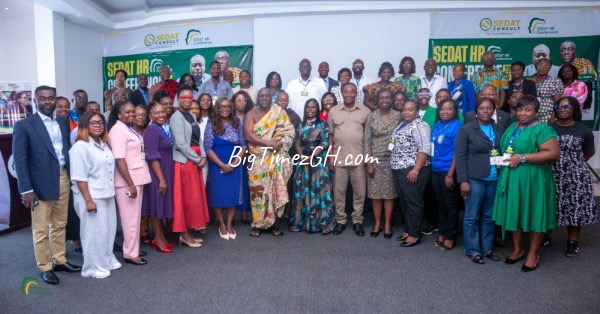

On Thursday, 30 April 2026, SEDAT Consult Limited brought together HR practitioners, business leaders, and people management professionals at the Western Serene Atlantic Hotel in Takoradi for the 2nd Takoradi edition of the SEDAT HR Conference.
Anchored on the theme “Authentic Employer Branding: Purpose, People, and Public Trust,” the event brought a powerful convergence of insight, candid dialogue, and practical, actionable strategies.
Through the presentations and discussions, participants examined how some organisations manage their employees compared with how highly respected employer brands do, highlighting the principles and practices that build trust, strengthen culture, and improve workforce engagement.
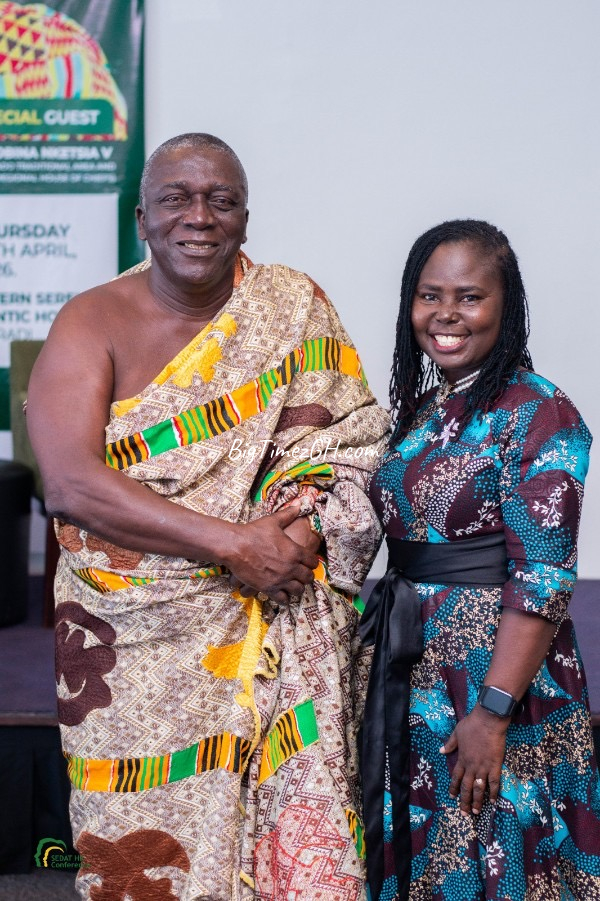
Hosted by Patricia Abena Kissi (Mrs.), HR Consultant, Certified Trainer, and CEO of SEDAT Consult Ltd, the conference featured a keynote address by Hon. Joseph Nelson, Western Regional Minister, and a special address by Nana Kobina Nketsia V, Omanhen of the Essikado Traditional Area and President of the Western Regional House of Chiefs. Also in attendance were three distinguished speakers whose presentations set the intellectual tone for the day.
Here is a recap of some of the insights from the three featured speakers, who spoke on different aspects of authentic employer branding.
The Culture Capital ROI: Building a Workplace Worthy of Pride
Maame Ekua Gaisey, a culture strategist, people enabler, and Managing Partner of FiveSixFive Limited, wasted no time in reframing the way organisations think about workplace culture.
“Strategy tells you where to go,” she told the room. “Culture capital determines how fast you can get there.” It was a line that drew murmurs of recognition, and rightly so. She defined ‘culture capital’ as the accumulated reserve of trust, shared beliefs, and behavioural alignment that reduces organisational friction.
Her case for investing in culture was economic before it was philosophical. She cited that the cost of global disengagement was $10 trillion in annual lost productivity, and she presented three measurable outcomes produced by high-culture organisations: a 23% increase in profitability; a high retention rate of employees, especially top performers; this could lead to saving up to 200% of the annual salary of a top performer; and an 85% net profit increase over five years. As she put it, culture is not a soft perk, a temporary, superficial, or optional HR initiative; it is infrastructure, a foundational or operating system that governs how work actually gets done, decisions are made, and challenges are handled. She defined ‘high-culture organisations’ as companies whose workplace culture is strong, aligned, and consistently experienced by employees, so their employees understand how they do things in the organisation, trust the organisation, and behave in ways that support shared goals.
Her framework rested on three pillars: psychological safety, which she described as the innovation engine; operational alignment, where values serve as an operating system rather than decoration; and shared legacy, which reflects the long-term impact organisations build with their employees and which they are proud of. She emphasised that employees do not quit shared legacies; they quit jobs or experiences that no longer match them. She challenged leaders to run what she called the ‘mirror test’, which is a culture and psychological check that assesses whether what an organisation claims to value is what employees actually experience day to day, particularly in how employees are treated, coached, and held accountable.
“Culture is what happens when the CEO isn’t in the room. Build a culture that makes you proud even when no one is watching.” – John Collison, Co-founder and President of Stripe
Public Trust and Corporate Reputation: How Consistency, Transparency, and Social Impact Shape Employer Branding
Kwame Ofori Afreh, HR Manager at Tullow Ghana Limited, approached the conference theme from the vantage point of corporate reputation and public trust. He used vivid, real-world cases to leave the audience with no room for vague or comfortable interpretations. Every example sharpened the point and made the stakes unmistakably clear.
He opened with the cautionary tale of BrewDog, the Scottish craft brewery that built a billion-dollar brand on being anti-corporate, promoting less bureaucracy, more autonomous decision-making, and a purpose-driven culture, only to have over 300 former employees publish an open letter in 2021 describing a toxic internal culture. The company, once valued at approximately £2 billion at its peak in 2021, was acquired in March 2025 for just £33 million, with 484 jobs lost and 38 bars closed. The lesson Kwame drew was sharp: the say-do gap is where employer brands fail. The say-do gap refers to the discrepancy between what organisations say they will do and what they actually do.
His session was structured around what he called the trust architecture, which featured three interdependent pillars.
Consistency involves aligning what an organisation communicates externally with what employees experience internally. He cited MTN Ghana’s sustained investment in digital skills as an example of alignment between internal values and public reputation, contributing to its position as a top employer of choice for Ghanaian graduates.
Transparency refers to the deliberate choice to share the reasoning behind decisions, even uncomfortable ones. He pointed to research showing that only 28% of Africans trust their employer’s public statements and argued that many organisations operate at a performative or selective level of transparency. He also referenced Buffer, a remote technology company that publicly shares employee salaries, noting that this approach reduced pay equity concerns and improved hiring efficiency.
Social impact, the third pillar, involves integrating purpose into everyday business operations. He explained that when organisations embed social impact into their strategic goals, they strengthen accountability and credibility while attracting mission-driven talent. He referenced a 2024 Deloitte study indicating that 70% of Gen Z and Millennials would leave a job that does not align with their values.
He illustrated this with Safaricom, whose mobile money platform, M-Pesa, has significantly advanced financial inclusion and supported job creation across Kenya. This has strengthened the company’s reputation and positioned it as a leading employer in the region.
“Your public reputation is not what you tell the market. It is what your employees tell their families at home.” – Jeff Bezos, Founder of Amazon
Building a People-First Workforce: Talent Attraction, Experience, and Retention in a Competitive Market
Felicia Opoku-Folitse, Head of HR and Administration at TAQA, focused on the systems and habits that distinguish organisations that attract and retain talent from those that struggle to do so.
Her session began with three illustrative stories. The first described a candidate who received prompt communication, clear guidance, and a positive recruitment experience, leading to acceptance of an offer. The second highlighted poor onboarding, which resulted in early disengagement and resignation. The third demonstrated the impact of structured development, mentorship, and growth opportunities on employee success and retention.
Through these examples, she showed that candidate experience, onboarding, and development are critical drivers of engagement. Organisations that invest intentionally in these areas create a sense of belonging, loyalty, and long-term commitment.
She emphasised that a people-first strategy must be grounded in respect, trust, inclusion, and empathy, supported by transparent recruitment processes, intentional employee experience design, and development-focused retention strategies.
“A people-first culture is not merely an HR initiative. It is a holistic transformation that requires commitment, consistency, and collaboration across all levels of the organisation.”
A Day Well Spent and More to Come
The SEDAT HR Conference 2026, Takoradi Edition, was undoubtedly a success. The conversations it sparked about culture, trust, leadership, and organisational integrity will continue to influence how organisations operate.
These reflections challenge organisations to examine the alignment between their values and their actions, and to rethink how employer brands are built and sustained.
In the meantime, explore more about SEDAT Consult Limited at www.sedatconsultlimited.com or reach us at (+233) 591 405 555.
By Kelvin Anane, HR Officer, SEDAT Consult Ltd., No. 8 Morendo Street, Behind Kata International Hostel, Nyamekye, Accra
Source By DC Kwame Kwakye